

Written in collaboration with vets
- Homepage
- Discover a dog friendly world
- Dog-friendly HOMES
- How To Stop A Puppy Biting
How To Stop A Puppy Biting

- Share
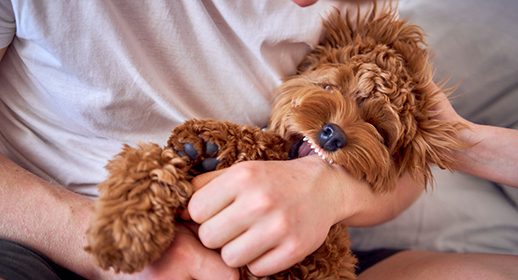
Puppies, a lot like human babies, love exploring the world with their mouths. Part of this is biting, which is a perfectly normal behaviour in puppies, driven by play, curiosity, and coping with discomfort from teething. These lively mouthing behaviours can feel concerning. However, understanding the causes will help you respond calmly and effectively when learning how to stop a puppy biting.
In this guide, we’ll explore clear, immediate actions to stop biting in the moment, training and prevention steps so the behaviour reduces over time, and a short list of things not to do when trying to curb biting in your puppy.
Why puppies bite - understanding the behaviour
The terms 'biting' and 'mouthing' are often used interchangeably when talking about puppy behaviour. However, understanding the difference is an important step when learning how to stop a puppy biting. Mouthing is a gentler behaviour, where a puppy might put their mouth around your hand during play without applying much pressure. Biting feels sharper and more forceful, even if the action isn’t intended to cause harm. In the majority of cases, these behaviours are part of normal development, not signs of real aggression. Researching dog body language tips can help you understand the root of different behaviours and distinguish what’s healthy and normal compared to what may need more attention.
One of the main causes of mouthing and biting is teething discomfort. Just like human babies, puppies experience sore gums as their teeth come through. This encourages chewing and mouthing to relieve the pressure. Play is another common reason, with puppies using their mouths to explore their environment and interact with littermates. This play helps puppies to learn bite inhibition (the ability to control the force of their bites). If your puppy is prone to stress when they’re left alone, learning how to help a dog with separation anxiety, along with bite inhibition, can reduce boredom-driven biting. Hungry puppies may also bite or mouth more frequently. Learning some basic dog feeding tips and getting into an appropriate schedule is key, helping you manage the puppy’s energy levels and reduce the need to bite.
Bite inhibition is an essential life skill that puppies normally learn in litters. When playing together, a yelp from one of their siblings can teach them they’ve bitten too hard. With consistent guidance, you can teach your puppy a similar lesson, helping them develop a soft mouth and appropriate play behaviour. This is an important step in learning how to stop a puppy from biting.
How to stop a puppy from biting: Immediate actions
When your puppy bites, your immediate reaction shapes what they learn. A short, sharp 'ouch' can mirror the yelp that they’d experience when playing with their littermates goes too far. This will startle most puppies, and in most cases, they’ll stop playing immediately.
The moment your puppy releases, withdraw your attention completely. Stand up, cross your arms, and look away from the puppy for around 10-20 seconds. This mini 'silent treatment' tells them clearly that when they bite, the fun stops.
After this, calmly redirect them to something more appropriate, like offering a chew toy or playing with a rope toy. This will teach them that they can bite, just without breaking the rules.
Prevention & tips to stop a puppy from biting
Though it’s important to stop biting in the moment, preventative steps that set your puppy up for success can also make a big difference. This means managing your puppy’s environment, making sure their needs are met, and steadily building good habits that help you and your dog understand one another.
Puppies are curious and always want to explore the world with their mouths, especially when they’re hungry, tired, or overstimulated. Keep a variety of chew toys in every room where you and your puppy interact. If your puppy starts biting or mouthing, you can immediately offer them a toy instead of your hand. Giving appropriate outlets like this is one of the most effective strategies when exploring how to stop a puppy from biting.
Variety and rotating toys is also important to keep things interesting. Consider offering:
- Durable rubber chew toys to relieve teething.
- Soft tug toys for more structured one-on-one play.
- Puppy-safe teething toys to soothe sore gums.
Establishing a routine that includes lots of rest is another key part of figuring out how to stop a puppy biting. Overtired puppies can get grumpy and will therefore be more likely to bite. Try to schedule sessions of 5-10 minutes, 2-3 times a day, broken up by periods in their bed, crate, or a quiet area. This will help burn energy without overwhelming, and give your puppy enough time to have a nap and recharge their batteries.
Finally, try to make sure everyone in your household follows the same rules. If one person engages in rough hand play while another discourages it, your puppy might become confused about what’s acceptable behaviour. Gentle handling will help your puppy learn bite inhibition, while also preparing your puppy for future care routines as you learn How to Groom Your Dog at Home.
Positive reinforcement & training consistency
Reward the behaviour you want to see. When your puppy is playing calmly, or licking your hand rather than biting it, give them some quiet praise or a small treat. Remember that consistency in the way you teach behaviour matters more than punishment. This is a key part of the 5 Dog Training Tips to Help Your Dog Understand You, and is essential for any new dog owner who wants to see results. If you can adopt a habit of responding calmly every time, and redirect biting behaviour in the same way, your puppy will learn the rules faster. Mixed messages can confuse your puppy, and slow down progress when you’re trying to stop puppy biting.
Puppy socialisation and bite inhibition practice
Bite inhibition, your puppy’s ability to control the strength of their bite, is an important part of curbing bad behaviour. Puppies usually start learning this when playing with their littermates, but continued practice is important. Socialization through safe, supervised play with other puppies can help with this. If your puppy bites too hard, the other puppy will often yelp and stop playing with the puppy who’s being too rough. This natural feedback teaches and reinforces limits. Puppy classes run by qualified trainers can also provide controlled opportunities to practice appropriate play.
What not to do when your puppy bites
Biting from your puppy can be more than a little frustrating, and your first reaction may be to shout or physically correct the behaviour. Try to resist this urge as much as possible. Harsh punishments for biting can frighten young dogs, potentially increasing their anxiety or defensive behaviour.
Shouting, nose-flicking, or using reactive aversives will often only damage the trust between you and your pet. Your puppy might learn to fear your hands, rather than learn what kinds of behaviour are acceptable instead. In some cases, this can even make their biting behaviour even more intense or unpredictable. Making a habit of rough play that encourages chasing hands and feet can also blur boundaries and worsen the problem, making it harder to stop puppy biting later on. Something that feels like fun now could become a problem as your puppy grows up, especially if it’s a larger, stronger breed.
If it feels like your puppy is taking a long time to grow out of unwanted behaviours, remember not to blame yourself. Biting is a normal developmental phase for all dogs. The important thing is to pay attention and keep working on the behaviour with time and patient guidance.
How to stop a puppy biting: Things to consider
Teething in puppies plays a big role in biting behaviour. Puppies generally begin teething at around 3-4 months old, and the process can continue until about the 6-month mark. During this time, chewing on anything they can get their chops on helps the puppy relieve gum discomfort. New dog owners should expect steady, gradual progress, and not an overnight transformation. Most puppies will nip less frequently as they mature and learn impulse control. The important thing is to keep reinforcing that gentle behaviour.
Despite nips being a natural behaviour, it’s important to remember that not all biting is playful. Make sure to research dog body language and stay vigilant for signs of aggression, like a stiff body posture, growling with an intense stare, or aggressively guarding their toys or food. If your puppy’s biting ever feels intense, overly frequent, or accompanied by these examples of concerning body language, it’s best to seek professional support.
Consulting a qualified vet is important to rule out underlying physical health issues or seek a behaviourist referral if needed. A qualified pet behaviourist can also help to assess whether there’s an underlying issue that’s causing your puppy’s behaviour. In the meantime, make sure you’re focusing on calm redirection, clear boundaries, and providing appropriate outlets for natural chewing and play behaviour. With enough practice, consistency, and support, most puppies will grow out of biting and into relaxed, well-mannered pets.
How to stop puppy biting — FAQs
Is a puppy biting a sign of aggression?
In most cases, no. When a puppy bites, it’s usually just a part of natural play, teething, and exploring the world around them. Playful biting often has a bouncy, loose feel to it and is accompanied by playful body language like tail wagging and exaggerated movements. Real aggression is rare and can include stiff postures, growling with a fixed stare, or snapping their jaws without any play stimulus. If you’re concerned about signs of aggression from your puppy, make sure to consult with a qualified vet.
Should I let my puppy bite during play?
Ideally, you shouldn’t allow any biting on the skin, even during play. What feels cute and fun now may not stay that way once your puppy has grown to full size.
Instead, try to redirect the behaviour and teach your puppy that their toys are for biting, but hands aren’t. If you feel their teeth on your hand, give an audible 'ouch', calmly stop the game, and redirect the puppy’s attention to a toy. This reinforcement will help your puppy learn important boundaries while still enjoying fun, structured play.
Why does my puppy bite more when they’re tired or overexcited?
Just like young children, puppies who need a rest can get temperamental and lose impulse control. Overstimulation can have a similar effect. Busy environments, sudden movements, and loud noises can all tip them into 'zoomies' mode and increase the chance of biting. If it seems like your puppy is overtired or overstimulated, you may want to try shorter play sessions, calm transitions between rest and play, or regular nap time. Settling your puppy into a predictable routine can make all the difference.
Does ignoring a biting puppy actually work?
Yes, but only when it’s done consistently and correctly. If you briefly withdraw attention for 10-20 seconds, it sends a message to your puppy that biting makes the fun stop. The key here is timing. As soon as your puppy nips, turn away immediately, and avoid following up with more attention, like pushing them off or talking to them, as they may mistake this for a game. If ignoring your puppy isn’t enough to stop the behaviour, pair it with redirection to a more suitable chew toy.
What toys are best for puppies that bite a lot?
Puppies who bite too much often just need more appropriate outlets for their energy. Durable, puppy-safe toys will allow them to engage in their natural behaviours, while protecting your hands, furniture, and other things they shouldn’t be biting.
Good toys for puppies that bite a lot include:
- Rubber chew toys are specifically designed for teething relief.
- Food-dispensing toys that help keep them occupied.
- Soft tug toys for structured one-on-one play.
- Puppy-safe chews that soothe sore gums during teething.
adp_related_article_block22 344 YOUR DOG MAY ALSO LIKE …

 Tesco
Tesco  ASDA
ASDA  Morrisons
  Sainsburys
  Pets at Home
  Amazon
  Ocado
Ocado