

Written in collaboration with vets
- Homepage
- Discover a dog friendly world
- Dog-friendly TRAVEL
- Are Dogs Allowed on Trains? Dog Travel Tips
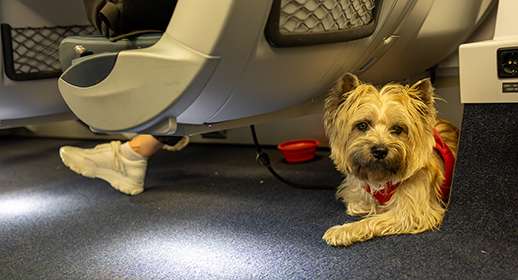
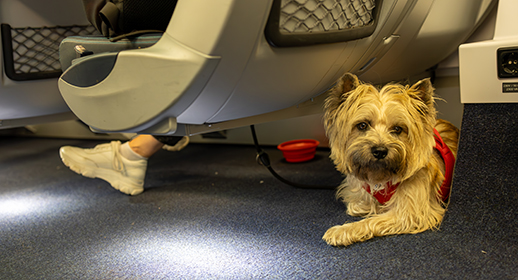
Are Dogs Allowed on Trains? Dog Travel Tips

- Share
For any owners planning a big trip with their furry friend wondering ‘Can dogs travel on trains?’ You’ll be glad to hear that the answer, in most instances, is a yes, dogs are allowed on trains.
Dogs are allowed on most UK trains, though there are some things you’ll need to know before you get your ticket.
There are many considerations when it comes to travelling with your dog – from differing train operator policies, which vary from commuter trains all the way up to the Eurostar, to taking care of your dog’s welfare on the journey itself.
After reading this, you’ll be much more confident about taking your canine companion on adventures by train.
So, are dogs allowed on trains in the UK?
The rules around whether dogs are allowed on trains vary, but there is no blanket law that says dogs cannot travel on trains in the UK.
National Rail does ask that you keep your dog on a lead or in a carrier at all times, though.
Can dogs travel on trains for free? The guidance suggests passengers may bring up to two pets with them on a train for no additional fee. Any more than that and extra charges may apply. Assistance dogs always ride for free.
As exciting as it may be for your pet to look out of the windows, it is forbidden for dogs to sit on the seats, though smaller dogs may be allowed to sit in your lap on some trains, so long as they are on a lead.
Additionally, staff are able to refuse travel if your dog causes disruption or safety concerns.
Do rules differ between train companies?
Though most train companies would answer ‘Are dogs allowed on trains?’ with a resounding 'yes', each operator may have slightly different guidance, and it is important to check their website before travelling.
Commuter and long-distance services, for example, may have differing rules for dogs on trains, with long-distance services often requiring a dedicated pet fare or advanced booking, and some may limit pets to certain carriages.
Why it’s important to know train travel rules for dogs
No matter how excited you and your furry friend are for your big journey, preparation matters – not only for you and your pet, but also for those around you.
Understanding the rules of travel for dogs on trains is important, and travelling responsibly is vital to avoid any unnecessary charges or removal from trains.
It is also important to follow any guidance, such as using leads or pet carriers, to ensure the safety of your dog and your fellow passengers.
Travelling with assistance dogs on trains
Assistance dogs are permitted to travel with their owners on all UK trains, in all carriages, free of charge.
Guide dogs, hearing dogs, and mobility support dogs have a legal right to travel safely by your side.
While allowed to travel, assistance dogs are not allowed on seats either, though they can sit or lie under them. Passengers with assistance dogs are able to request an ‘Assistance Dog Under Seat’ card in some trains, which reserves the seat beside the passenger, ensuring your dog’s space is their own.
Some operators, such as Eurostar, require prior booking for assistance dogs. Booking in advance with other long-distance operators can also ensure adequate space for both owner and dog.
Can dogs travel in First Class on trains?
Now you know you can take dogs on trains; some of you may be left wondering, ‘But can dogs travel on trains in First Class?’
For those who like to travel in style, you’ll be pleased to know that dogs are generally allowed in First Class, so long as they are kept off seats and on leads, though some operators may restrict this access during busy services.
If you do choose to travel in First Class with your furry friend, it’s important that you respect a quieter environment, ensuring your dog remains calm so as not to disrupt other passengers.
It may also be worth bringing a blanket or mat for your dog to sit on, to respect the environment and surrounding passengers.
Are dogs allowed on the Eurostar?
Can dogs go on all trains? Unfortunately, the answer to that is no.
Currently, Eurostar travel is reserved for humans and assistance dogs only on its Brussels and Lille routes to and from London. Non-working dogs are not permitted.
On all other Eurostar services between France, Belgium, Germany, and the Netherlands, however, dogs are permitted, with those weighing less than 6kg incurring no additional charge so long as they are in a pet carrier. Can bigger dogs go on these trains? Yes, but for a €30 fee.
Permissions vary for certain routes, and policies may change, so checking the official guidance before planning travel is key.
Keeping dogs safe and comfortable on trains
We all know that trains are not the most comfortable places to be, so doing everything possible to ensure your dog can travel on trains in comfort is paramount to their welfare.
With great preparation, such as looking at your operator’s policy on how to take dogs on trains, there’s a lot less to worry about, as you’ll spare your pet from any undue stress and safety concerns that could come with not following the rules.
Make sure to also bring any essentials your dog may need, such as water, treats, poo bags, and their collar and lead – dogs are allowed on trains, but they are still your responsibility.
If you can, travelling outside of peak hours may reduce any stress for your dog, as there will be less noise in the carriage.
Some signs that your dog is stressed on your train journey include:
- Excessive panting, drooling or yawning – These are all symptoms of stress and could also indicate motion sickness
- Restlessness– Pacing their area or trembling may be an indication of stress.
- Whining –Audible whines are another telltale sign of your dog being stressed out.
To reduce stress, try the following strategies:
- Practice makes perfect – Trains can be frightening places for dogs, so it may be best to build up to a train journey gradually. Start by visiting a train station, stepping on and off a train, and then take your dog on a short train journey, praising any calm behaviour. This is sure to boost your dog’s confidence.
- Go for a walk – Taking your dog for a long walk before a train journey allows them to burn off energy.
- Bring comfort items - Familiar items such as toys or blankets can provide comfort to your dog.
- Take a break – If your dog gets too distressed, step off the train for a moment before getting back on it.
- Find somewhere quiet – Often, dogs may become stressed due to noise, so finding a quiet area on the train will help.
- Avoid a heavy meal - This may reduce nausea in your dog or at least reduce the likelihood of vomiting. This is a great idea for those with motion sickness in particular.
Top tips for travelling on trains with dogs
Before you plan your next adventure with your canine companion, consider these top tips for train travel with your dog:
- Plan ahead – Checking your train operator’s policy on pets can make a world of difference, allowing you to avoid unnecessary fines and your dog to avoid unnecessary stress.
- Prepare – Ensure you pack anything that you would typically take on a walk with your dog (snacks, water, and poo bags), as well as comfort items that may help them if needed.
- Give yourself time – If your dog is new to travelling by train, it might make them anxious or distressed, so allowing yourself enough time to take a break can help you both out.
- Follow the rules – Both for the welfare of your pet and out of respect for your fellow passengers, it’s important to follow any rules provided.
Final thoughts: Planning stress-free train travel with your dog
Every great adventure begins with great planning, and if you prepare well, you’ll have the peace of mind that your next experience will be the best one yet. Maybe you and your dog will make some friends along the way, too.
Now you and your pawed-pal are ready for your next escapade, and maybe once you’ve conquered trains, air travel for your dog won't be too far off.
Are dogs allowed on trains? - FAQs
Can dogs sit on your knees on a train?
While dogs are generally required to sit on the floor, some train operators allow dogs to sit on their owner’s knee or lap, so long as they are on a lead and not causing any disruption to other passengers or taking up a seat of their own.
How much does it cost to take a dog on a train in the UK?
This depends on the type of train travel and the operator. Commuter trains such as the London Underground allow up to two pets with no additional charge, but longer-distance services may require a fee. This is typically up to about 50% of an adult fare.
If you are unsure, check your operator’s website before travelling.
Can dogs go on the seats on trains?
Can dogs go on train seats? No, dogs are not allowed to occupy a seat of their own on trains. Instead, they must sit on the floor or underneath the seats, in a pet carrier or with a lead attached to them.
Some train operators, however, do allow dogs to sit on the owner’s lap, so long as they do not disrupt other passengers.
Do dogs get travel sick on trains?
Yes, some dogs on trains are affected by travel sickness. Though it is an issue that mostly affects puppies, it can present itself in dogs of any age and can show symptoms of drooling, vomiting, or panting.
adp_related_article_block39 300 YOUR DOG MAY ALSO LIKE …

 Tesco
Tesco  ASDA
ASDA  Morrisons
  Sainsburys
  Pets at Home
  Amazon
  Ocado
Ocado